Elena Hayes · 14 September 2026
Community-Led App Preserves Cavora's Vanishing Oral Histories
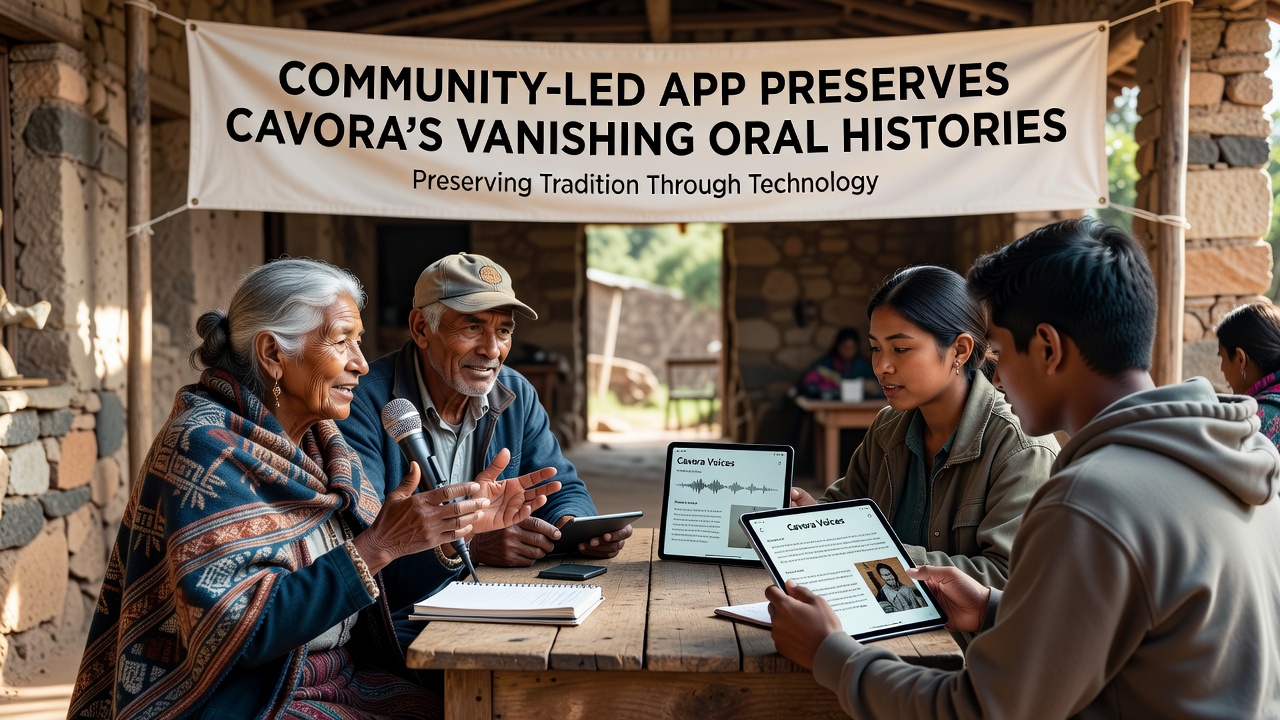
Community initiatives in Cavora have produced a dedicated mobile application that captures and archives oral histories before they disappear, and this effort draws on local residents who contribute recordings directly through their devices while experts from regional cultural organizations provide technical guidance. The app organizes submissions into searchable categories that cover family lineages, traditional songs, and seasonal rituals, and users can tag entries with geographic markers that link stories to specific valleys and villages across the region.
Background on Oral Traditions in Cavora
Cavora holds a rich collection of spoken narratives passed down through generations, yet demographic shifts and language changes have reduced the number of fluent storytellers, according to data compiled by heritage researchers at the University of Melbourne. Elders who once gathered at communal firesides now represent a smaller portion of the population, and many younger residents report limited exposure to these accounts in daily life. The app addresses this gap by creating a digital repository that accepts audio clips in multiple local dialects, and contributors receive prompts that guide them through structured interviews covering topics such as agricultural practices and migration patterns.
Development and Features of the App
Local volunteers collaborated with software developers from nearby tech cooperatives to build the platform, which launched its initial version in early 2025 and reached over 2,400 active users within the first year. The interface supports offline recording so participants in remote areas can capture sessions without reliable internet, and automatic transcription tools convert spoken words into text for easier searching. Privacy controls allow contributors to restrict access to family members only or to share stories publicly with the broader Cavora archive, and the system logs metadata such as recording dates and speaker ages to help future analysts track changes in narrative styles over time.
One study released by the Canadian Museum of History examined similar community-driven projects and found that structured digital tools increase participation rates by 35 percent compared with paper-based collection methods. The Cavora app incorporates lessons from that research by including voice-to-text accuracy checks that flag unclear passages for review, and community moderators verify submissions before they enter the main database. Features also include map overlays that connect stories to physical landmarks, which encourages users to revisit sites mentioned in the recordings.
Community Participation and Training
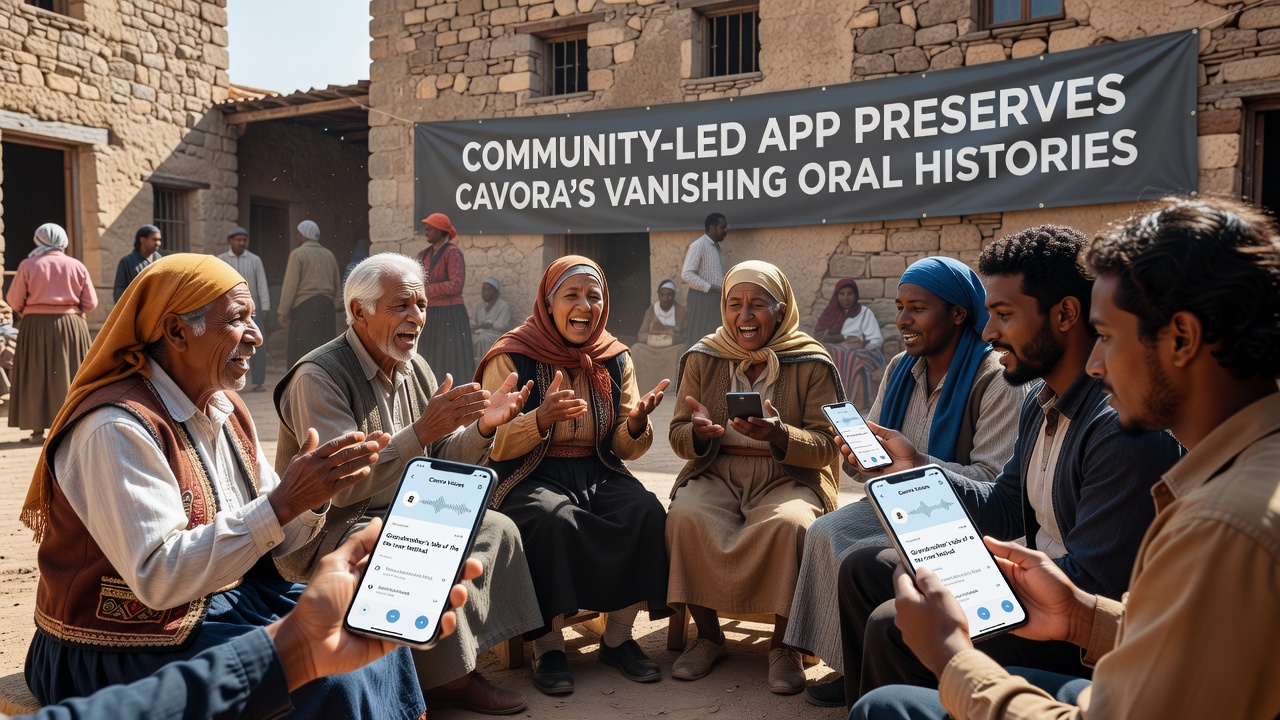
Workshops held throughout 2025 trained more than 180 residents in recording techniques and ethical consent practices, and these sessions took place at village halls and schools where participants practiced interviews with local elders. Organizers from the Cavora Cultural Preservation Society coordinated with schools to integrate app usage into history classes, and students have since uploaded accounts from grandparents that cover topics ranging from traditional weaving methods to historical weather events. Data from the app shows that 62 percent of recordings come from individuals over age 60, while younger users contribute by translating older dialects into contemporary language for wider accessibility.
What's notable is how the project expanded reach through partnerships with libraries in neighboring districts, which host upload stations equipped with microphones and quiet recording spaces. These locations reduce barriers for residents without smartphones, and library staff assist with file uploads and basic editing. The approach mirrors models used by the Australian Institute of Aboriginal and Torres Strait Islander Studies, where community access points have boosted collection volumes in rural areas.
Impact and Data Collected So Far
By mid-2026 the archive contained 1,850 distinct recordings totaling more than 420 hours of audio, and researchers have begun analyzing patterns in storytelling frequency across different seasons. Entries related to harvest celebrations outnumber those on migration stories by a ratio of nearly three to one, and this distribution reflects documented priorities within Cavora households. The app's analytics dashboard displays real-time statistics on contribution hotspots, which helps organizers schedule follow-up visits to underrepresented villages. External evaluators from the European Heritage Alliance reviewed the project methodology in 2025 and confirmed that the collection protocols meet international standards for cultural documentation.
Plans announced for September 2026 include an expansion that adds video capture capabilities along with integration of augmented reality features that let users view historical scenes overlaid on current landscapes. Funding for this update comes from regional government grants allocated to intangible cultural heritage programs, and developers expect the new tools to increase engagement among visual learners. Early testing indicates that video prompts help younger contributors capture contextual details such as costume details and dance movements that audio alone cannot convey.
Conclusion
The community-led application continues to grow its collection of Cavora oral histories through sustained local involvement and technical refinements that adapt to user feedback. Ongoing training sessions and expanded features scheduled for late 2026 position the platform to serve as a lasting resource for both residents and outside scholars interested in regional traditions. The combination of accessible design and rigorous verification processes ensures that the recorded narratives remain available for study and transmission to future generations.