Sam Albrecht · 12 October 2026
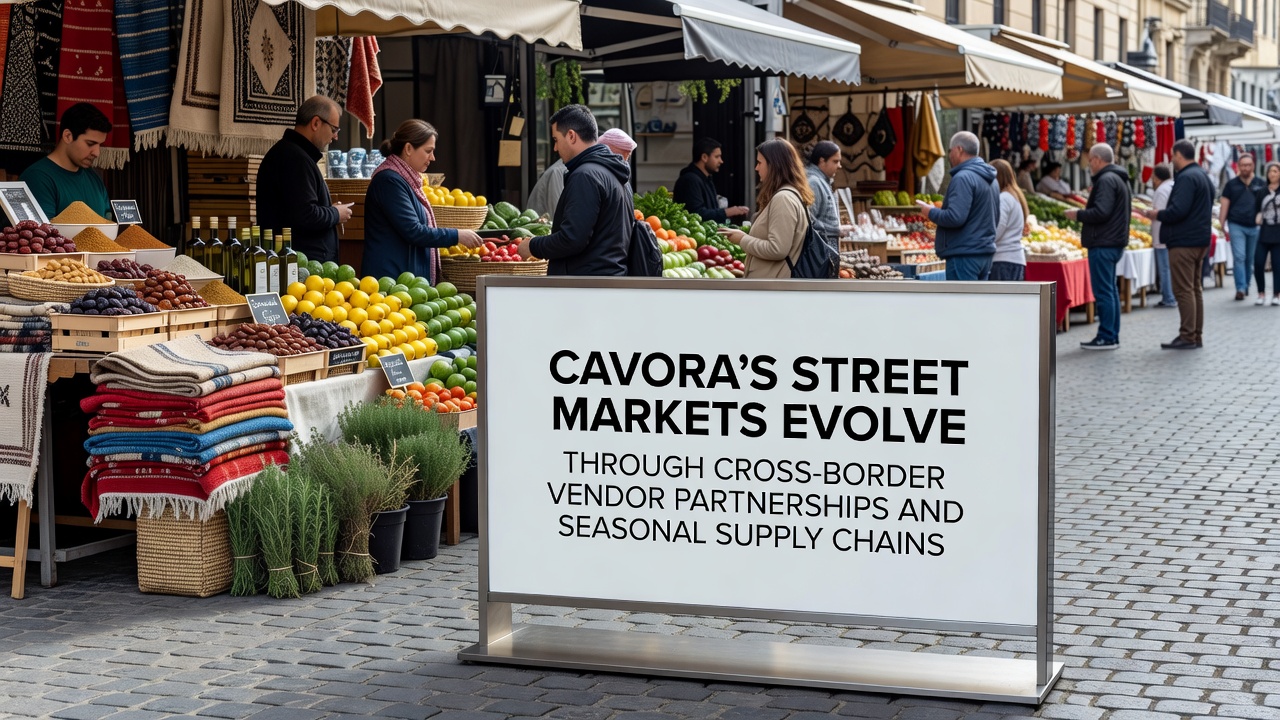
Cavora Street Markets Transform Through International Vendor Collaborations and Seasonal Logistics
Street markets across Cavora have shifted their operations over recent years as vendors form partnerships that span national borders while adjusting to the rhythms of seasonal supply chains, and data from regional trade records shows these changes accelerating in 2025 and into October 2026.
Vendors in central Cavora districts now coordinate directly with suppliers in neighboring regions for consistent access to goods that follow harvest cycles, and this approach allows markets to maintain inventory without relying solely on local production that fluctuates with weather patterns. Observers note that partnerships established in 2024 have expanded to include formal agreements covering logistics and quality standards, which reduces delays during peak seasons.
Cross-Border Vendor Partnerships Drive Inventory Stability
Partnerships between Cavora-based vendors and those operating in adjacent territories have created shared distribution networks that handle everything from fresh produce to crafted goods, and these arrangements rely on coordinated schedules that align with border crossing protocols. Research indicates that such collaborations have increased the variety of items available at individual stalls by incorporating items sourced from multiple climates and growing seasons.
One documented case involves a network of produce vendors who linked up with agricultural cooperatives outside Cavora to secure winter vegetables during local off-seasons, and the result appears in market ledgers showing steadier sales volumes throughout the year. These ties also incorporate joint purchasing agreements that help stabilize prices when supply volumes shift due to seasonal factors.
Seasonal Supply Chains Shape Daily Market Operations
Supply chains tied to seasonal availability now dictate much of the daily setup at Cavora markets, where vendors adjust stall layouts and opening hours based on incoming shipments tracked through shared digital platforms. Figures from local commerce reports reveal that markets in the northern districts receive bulk deliveries timed to autumn harvests from southern partners, while spring cycles bring different goods through eastern routes.
Those managing these chains have implemented tracking systems that account for transit times across borders, and this has allowed adjustments when weather events affect routes. Data compiled by trade monitoring groups shows fewer stock shortages at participating markets compared to earlier periods when vendors operated independently.

Logistics Adaptations and Technology Integration
Market operators have incorporated basic technology tools to manage the flow of goods arriving through these partnerships, and apps developed for inventory sharing help coordinate between vendors on either side of the border. According to industry reports from regional economic bodies, adoption of these tools rose notably after 2023 as supply disruptions highlighted the need for better coordination.
Vendors report that seasonal adjustments now happen with greater precision because partners exchange forecasts on expected yields and delivery windows, and this information flows through established channels rather than ad-hoc communications. Evidence from commerce statistics points to expanded stall offerings during shoulder seasons when combined supply sources fill gaps left by local harvests.
Impacts on Vendor Networks and Market Layouts
Market layouts in Cavora have evolved to accommodate larger or more frequent deliveries tied to cross-border arrangements, and some stalls now feature designated areas for goods arriving on specific days of the week. Those tracking these developments observe that vendors in partnered networks often share storage space or transport resources to handle volume spikes during harvest peaks.
Records from October 2026 indicate continued growth in the number of active cross-border agreements, and this trend aligns with broader patterns of regional trade facilitation that support small-scale commerce. The structure allows markets to feature rotating selections that reflect both local traditions and imported seasonal specialties.
Conclusion
Cavora street markets continue to adapt through these vendor partnerships and supply chain adjustments, and the patterns established in recent years provide a framework for ongoing operations that respond to seasonal and cross-border variables. Trade data and operational records document the shift toward interconnected networks that maintain consistent market activity regardless of local production cycles.